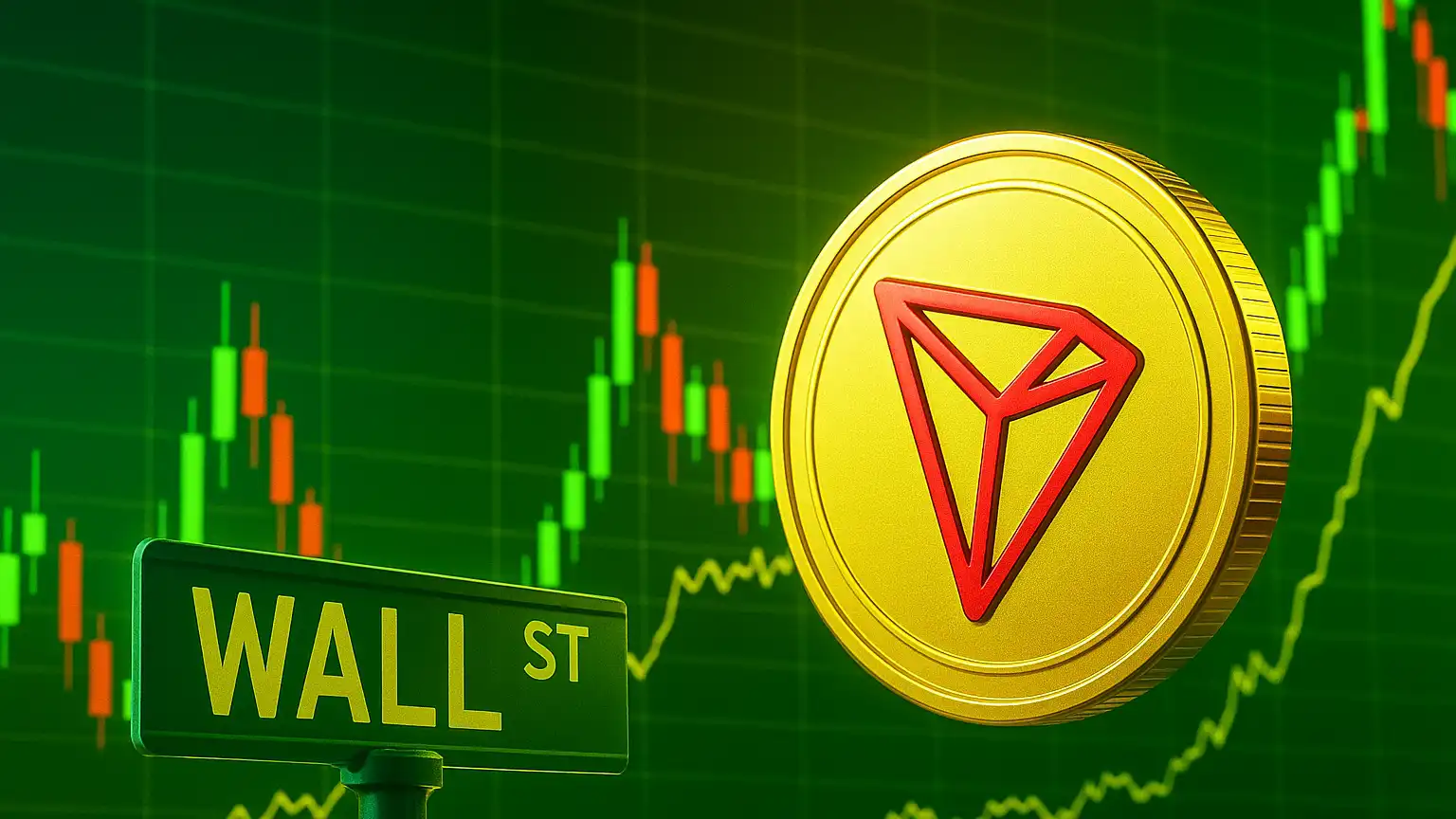
Anchorage Digital, the only federally chartered crypto bank in the United States, just announced institutional custody support for TRON’s native token, TRX. It’s a big deal on paper—TRON hosts over $86 billion in stablecoins, second only to Ethereum—but the market barely shrugged. TRX is still trading around $0.31, essentially flat over the past day.
So what’s going on? The short answer: institutional onboarding takes time. The long answer involves regulatory hurdles, phased rollouts, and the reality that Wall Street money moves differently than retail capital.
What Anchorage’s Custody Actually Means
For U.S. institutions—think pension funds, insurers, and asset managers—custody isn’t optional. It’s a checkbox required by the SEC and other regulators before they can touch a digital asset. Until now, many of these funds simply couldn’t access TRON, even if they wanted to. The compliance and legal frameworks didn’t exist, or building them in-house was too expensive.
Anchorage changes that. As a federally chartered bank vetted by the Office of the Comptroller of the Currency, it provides the qualified custody that satisfies regulatory requirements. CEO Nathan McCauley put it simply: they’re bringing “one of crypto’s largest ecosystems into an institutional framework.”
The rollout happens in three phases. Phase one, which is live now, covers cold-storage custody for TRX. Phase two, expected in Q2, will add support for TRC-20 tokens—meaning stablecoins like USDT and USDC can sit alongside Bitcoin and Ethereum in regulated portfolios. Phase three, slated for the second half of the year, introduces native staking. That last part matters because it turns idle TRX into a yield-generating asset, potentially offering 4 to 6 percent annual returns under a bank-level risk framework.
Each phase expands the potential buyer base. Staking especially could shift demand, since institutional investors love yield when it comes with proper custody and compliance. The same dynamic already drove billions into proof-of-stake chains like Solana and Cardano.
Why the Price Is Still Stuck
Despite the news, TRX has barely budged. It’s been trading in a tight range between $0.295 and $0.32 for about two weeks. The chart shows a cluster of doji candles—basically indecision—even as derivatives open interest creeps higher.
Support sits at $0.30, a psychological level, and $0.295, where the 50-day exponential moving average lives. Resistance is at $0.32, the March swing high, and $0.33, the upper Bollinger band. A clean break above $0.32 on strong volume could open the door to $0.35, a level last seen during the 2021 bull run. On the flip side, a drop below $0.295 might expose $0.28, though that seems less likely unless Bitcoin itself tanks.
On-chain data actually looks bullish. Exchange reserves for TRX have dropped 5 percent this month, suggesting tokens are moving into self-custody or long-term wallets. Meanwhile, stablecoin transfer volume on TRON just hit its third-largest day ever, reinforcing the network’s role as a utility backbone for dollar-pegged assets.
So why isn’t the price moving? Timing. Institutional capital doesn’t flood in overnight. Funds need to update investment mandates, get board approvals, and layer in positions over weeks or months. Retail traders, by contrast, react immediately—but many have already priced in TRON’s fundamentals or moved on to the next narrative.
The Risk-Reward Puzzle for Traders
TRON’s market cap is already north of $26 billion. Doubling from here would require roughly the same amount of capital that built Solana’s entire ecosystem. That’s a heavy lift, even with institutional backing. For traders chasing explosive upside, the math just doesn’t work the same way it does for smaller-cap projects.
That arithmetic is pushing some speculators toward earlier-stage bets. One example getting attention is Bitcoin Hyper, a proposed Bitcoin Layer-2 promising Solana-level speed and a 36 percent staking yield during presale. Whether projects like that succeed is anyone’s guess, but the pattern is familiar: big headlines for established tokens send opportunistic money into smaller, thematically similar assets.
For those holding TRX, the Anchorage news de-risks the asset and validates the long-term thesis. But it also signals that the most explosive percentage gains probably already happened—or they’re happening elsewhere, in projects still too small or too new for custodians and regulators to notice.
The coming weeks will tell the story. Will deep-pocketed institutions grind TRX higher over months? Or will momentum-hungry retail capital chase the next 10x instead? Both timelines can coexist, but they reward very different strategies.
This article is intended for informational purposes only and does not constitute financial advice. Digital asset markets are volatile and carry significant risk; always perform your own due diligence before making an investment decision.