From Panic to Party in Four Hours
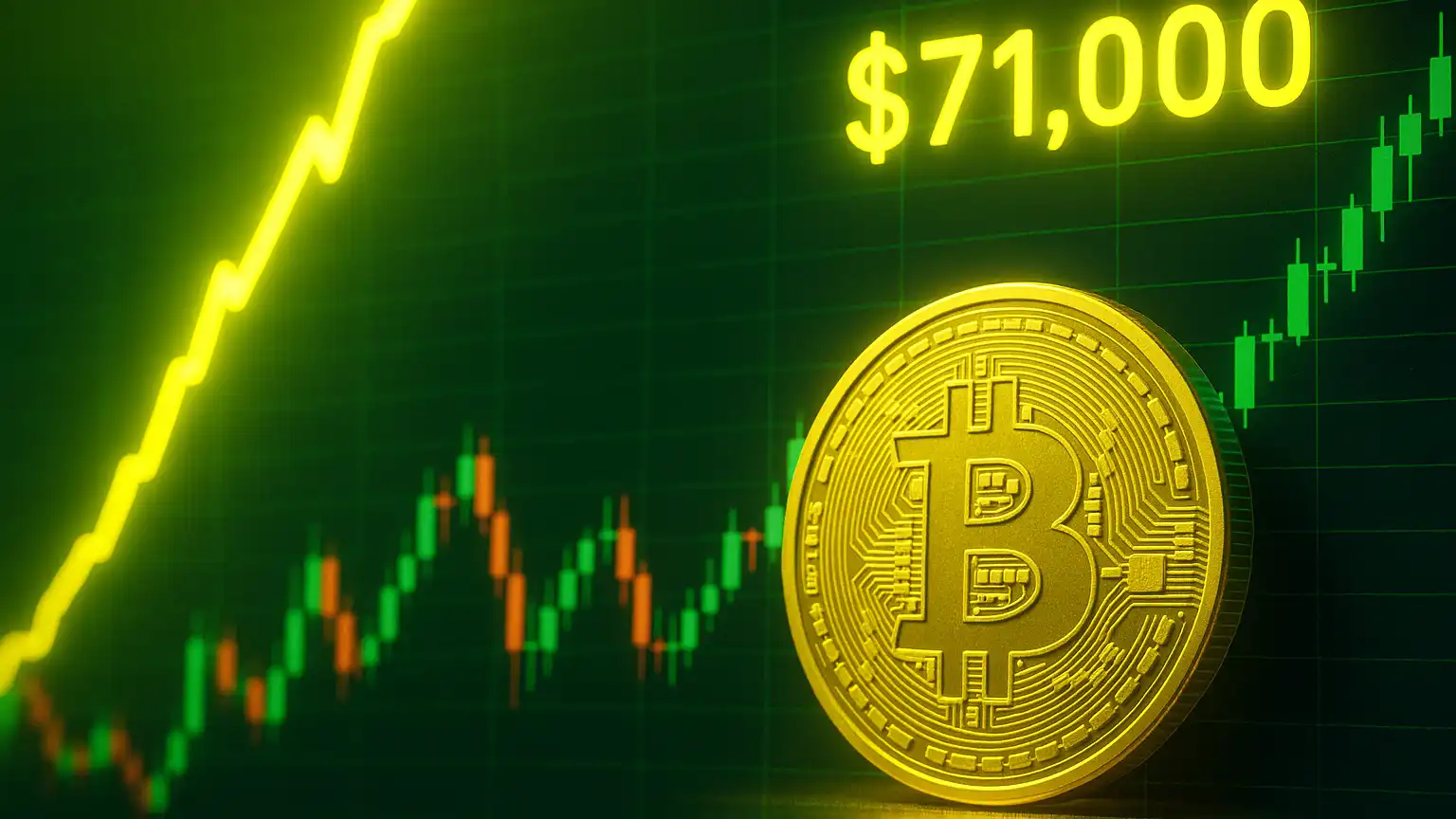
Bitcoin pulled off one of its fastest reversals in months this Monday. After a rough weekend, the cryptocurrency shot up from around $67,000 to over $71,000 in just twenty minutes—right after U.S. officials announced a five-day delay on planned strikes against Iranian infrastructure. The entire week’s losses? Gone.
The move wasn’t happening in isolation. Stock markets rallied, gold pulled back, and oil prices dropped—all signs that investors were suddenly feeling brave again. Over $160 million worth of short positions got liquidated in the chaos, the biggest wipeout since mid-January. Traders who bet against Bitcoin got caught on the wrong side, and badly.
Even sentiment indicators whipsawed. The Fear and Greed Index—a popular gauge of market emotion—swung from 33 (fear territory) to 68 (greed) in less than four hours. That kind of shift usually only happens at major market turning points.
Of course, nobody’s declaring victory yet. The strike delay is temporary, and if tensions flare up again, Monday’s gains could evaporate just as quickly. But the episode is a good reminder that Bitcoin doesn’t always react to geopolitical stress the way you’d expect. Sometimes the market prices in the worst, and when it doesn’t happen, the snapback can be violent.
What the Charts Are Saying
From a technical standpoint, buyers showed up exactly where they were supposed to. Bitcoin bounced almost perfectly off its 50-day exponential moving average, a level that’s held up throughout the current uptrend. Momentum indicators on the four-hour chart have climbed back to neutral after spending the weekend oversold, which suggests there’s room for more upside if the momentum holds.
The next big test is $72,000. Break through there with conviction, and Bitcoin could make a run at its March high around $74,000. Push past that, and we’re looking at new highs for the year near $74,700. If it stalls here, though, expect support to come back into play around $68,500 and $66,200.
Leverage Levels Look Healthy
Perpetual swap funding rates turned positive after the squeeze but aren’t anywhere near frothy yet. That’s important—it means the rally was driven mostly by actual buying and forced covering of shorts, not a wave of new leverage piling in. Total open interest is still about 9% below its February peak, so there’s room for new positions before things start looking overstretched. All told, the market structure actually looks cleaner now than it did last week, even with prices higher.
Money Flowing Into Bitcoin Infrastructure
When Bitcoin rallies hard, the riskier corners of crypto tend to light up even faster. That’s exactly what’s happening now, especially with projects built on top of Bitcoin’s network. One Layer-2 protocol currently raising funds has already pulled in over $32 million—way ahead of similar projects at this stage. The pitch is simple: get near-instant transaction speeds while still using Bitcoin’s security. Early participants are getting staking rewards in the double digits, which is drawing in even more capital as risk appetite comes back.
History shows that infrastructure tokens tend to outperform right after Bitcoin breaks out. Investors want more upside without abandoning the Bitcoin thesis entirely, so they reach for higher-beta plays. If Bitcoin clears $72,000 and keeps climbing, expect more money to flow into scalability projects, rollups, and cross-chain bridges—basically anything that helps expand what Bitcoin can do without compromising what makes it valuable in the first place.