
IOTA has kicked off 2026 with some genuinely promising developments. The IOTA Foundation is now part of the “ADAPT” initiative, which has locked in national-scale pilot programs across at least three countries, with more on the horizon. Meanwhile, integrations with platforms like BitGo, Stargate, LayerZero, and Uphold are opening doors in both U.S. institutional markets and the broader DeFi ecosystem. On the technical side, the upcoming Starfish consensus upgrade, human-readable identity systems (called “IOTA Names”), and new governance tools like the Validator Score are all aimed at making the network more decentralized, secure, and user-friendly as it scales.
Yet despite all this forward momentum on the fundamentals front, the token’s price tells a different story. IOTA is down sharply from its yearly highs, trading around $0.06495 with recent volatility showing little in the way of bullish energy. Sentiment is split—some analysts see real promise in the technology and adoption trajectory, while the charts are flashing caution signals for the near term.
What the Charts Are Saying Right Now
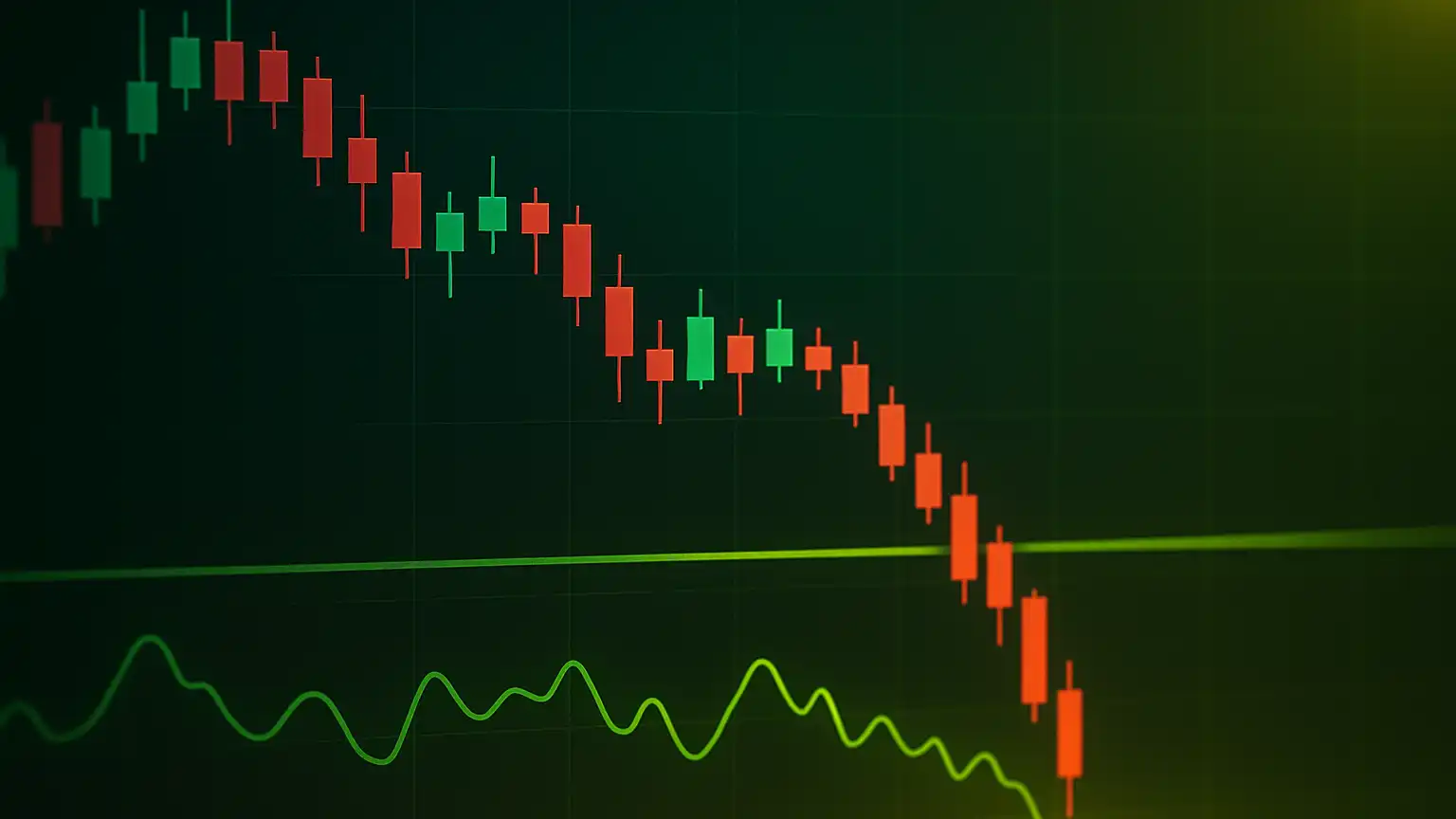
The 24-hour data shows IOTA/USDT down roughly 6.5%, and the technical indicators aren’t exactly encouraging. On the 4-hour chart, the Relative Strength Index sits at about 33.84—approaching oversold territory, but not quite there yet. The MACD is negative, with the MACD line dropping below the signal line and the histogram widening in the wrong direction, which suggests accelerating downward momentum. Both the simple and exponential moving averages for this timeframe are sitting above the current price (around $0.0678 and $0.06807), creating a ceiling of overhead resistance.
Looking at the daily pivot points, immediate resistance is clustered around $0.06697 and $0.06913, while support levels sit lower at $0.06307, $0.06133, and $0.05917. These levels line up with areas where supply and demand have historically clashed. The daily rate of change is also tilting downward at roughly −2.85%, reinforcing that momentum is still bearish.
Where Price Might Pivot Next
Resistance is likely to be strong in the $0.0670–$0.0695 zone. This area includes the 4-hour moving averages and those daily pivot points. For any rally to push through here, you’d need a real surge in volume and ideally a bullish MACD crossover to back it up. On the flip side, support between $0.0630 and $0.0613 is critical. If price slips below this range, the next stop could be around $0.0592. In short, the $0.0600–$0.0650 zone is where any short-term recovery attempt will likely be decided.
Two Scenarios for the Weeks Ahead
Based on where the indicators stand right now, there are two main paths IOTA could take in the coming days and weeks.
If the downtrend continues: Should IOTA fail to reclaim that $0.0675–$0.0690 resistance zone and the MACD stays negative with downward momentum intact, we could see price drift into the support zone between $0.0630 and $0.0592. A breakdown below $0.0613 might open the door to $0.059, and if broader market sentiment sours or selling pressure ramps up, a dip toward $0.055 isn’t out of the question.
If a reversal takes hold: On the other hand, if oversold conditions deepen—say the RSI drops closer to 30—and buyers start stepping in near support, watch for reversal signals like a MACD crossover or a strong bullish candlestick pattern. Reclaiming the $0.0675–$0.070 range would be the first sign of strength. From there, a push toward $0.075–$0.080 becomes plausible, though resistance will pile up around those levels.
What to Keep an Eye On
Here are the key metrics worth monitoring as this plays out: volume spikes—especially on sharp moves down (which could signal capitulation) or up (which would confirm reversal); a MACD crossover and narrowing histograms; RSI approaching or dipping below 30 before bouncing back; price action around that $0.0630 support zone—holding it would be bullish, losing it would be bearish; and finally, the broader market, especially Bitcoin and Ethereum, which tend to set the tone for altcoins like IOTA.
The Bigger Picture and What Could Go Wrong
From a fundamental standpoint, IOTA still has a solid case. The progress in enterprise infrastructure, regulatory engagement, and protocol upgrades suggests there’s real long-term value here. Low fees, IoT-friendly architecture, and real-world asset integrations all support the thesis that IOTA could appreciate over time as adoption grows.
But risks remain. Weak macro conditions, regulatory crackdowns, or delays in core updates like the Starfish consensus or validator decentralization could all weigh on sentiment. And technically, unless price can break above those moving averages and the MACD flips positive, the downtrend stays in play and could easily extend further. For now, it’s a waiting game between promising fundamentals and a chart that’s still struggling to find its footing.