Why a Crypto Exchange Is Teaming Up With a Tour de France Winner
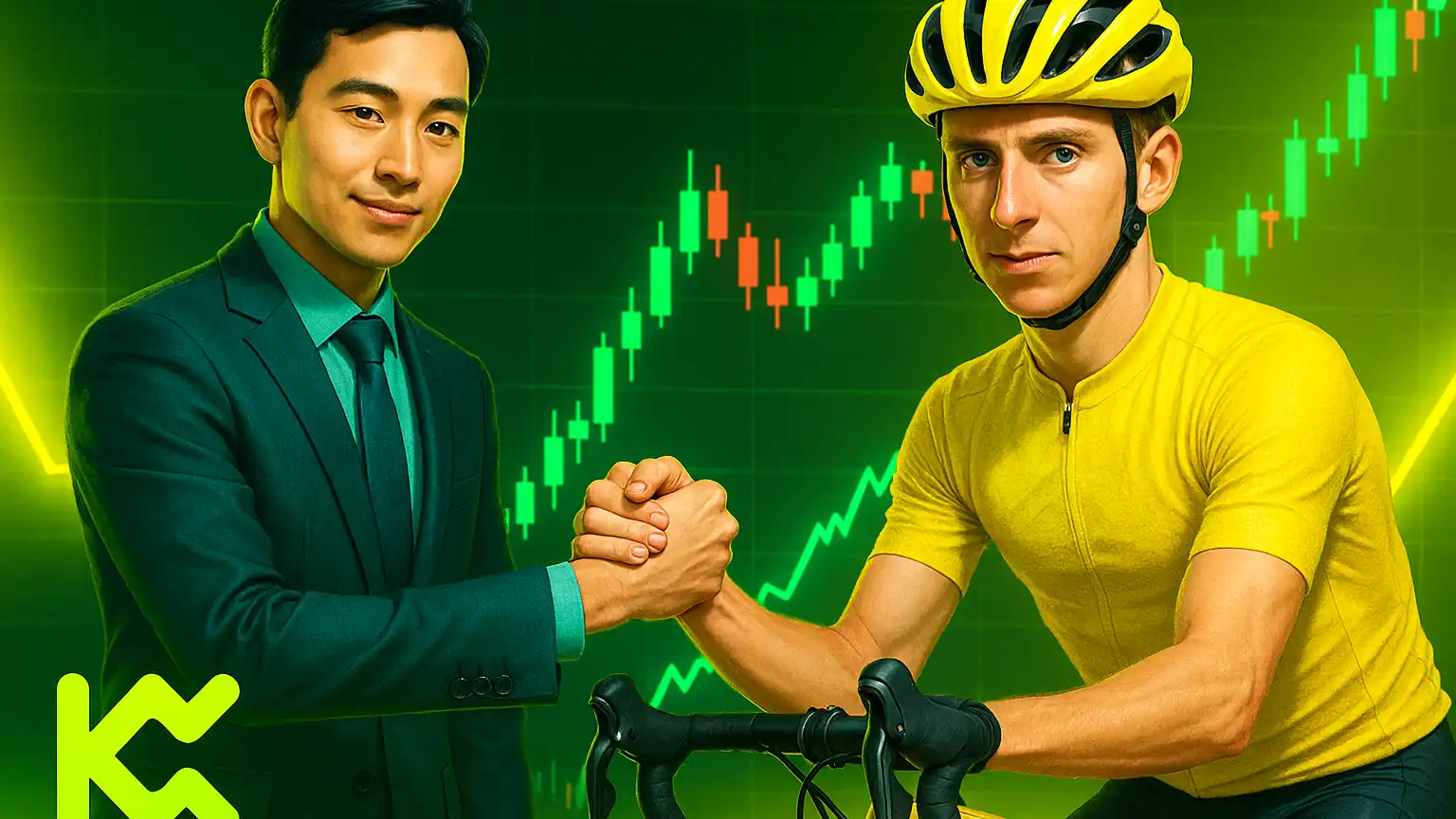
On January 28th in Vienna, cryptocurrency exchange KuCoin announced something unusual: a partnership with Tadej Pogačar,
the four-time Tour de France winner who currently sits at the top of professional cycling. The tagline? “Trust, Proven
by Performance.” This isn’t your typical sponsorship where a logo gets slapped on a jersey and everyone calls it a day.
Instead, KuCoin is using Pogačar as a metaphor—his grueling, measurable success in one of sport’s toughest disciplines
mirrors what the exchange says it’s been building for the past eight years: reliability, endurance, and proof of concept.
The timing matters. After the spectacular implosions of FTX, Celsius, and others in 2022 and 2023, trust has become the
scarcest commodity in crypto—more valuable than liquidity, more elusive than regulatory clarity. KuCoin’s executives
say they picked Pogačar precisely because cycling demands exhaustive preparation, constant risk management, and visible,
repeatable results. It’s the kind of unglamorous, persistent work that doesn’t make headlines until someone wins, which
is exactly the story KuCoin wants to tell about its own operations.
The Regulatory Climb Gets Steeper
Behind the athlete and the marketing campaign sits a bigger shift. KuCoin recently secured SOC 2 Type II and ISO 27001:2022
certifications, registered with AUSTRAC in Australia, and just locked in a MiCA licence in Austria. That last one is
particularly important: Europe’s Markets in Crypto-Assets regulation is rolling out this year, and exchanges that want
to operate across the EU will need to meet strict standards around capital reserves, custody, and transparency. KuCoin’s
Austrian licence gives it passporting rights—basically a ticket to do business across the entire European Union under
one set of rules.
The Vienna announcement wasn’t just about Pogačar. It was KuCoin planting a flag: we’re no longer just an exchange,
we’re positioning ourselves as regulated financial infrastructure. That’s a mouthful, but it signals ambition beyond
retail crypto traders. Institutions have been sitting on the sidelines waiting for clearer rules. MiCA is those rules.
And exchanges that get compliant early stand to capture a wave of money that’s been waiting for permission to enter.
Trust Is Still the Missing Piece
Bitcoin’s network alone settled around $780 billion in January, yet retail participation is still well below where it
was in 2021. Multiple surveys from late 2023 found that “lack of trust” now ranks higher than “price volatility” as
the main reason people stay away from crypto. That’s a tough problem to solve with whitepapers or security audits.
So KuCoin is trying something different: borrowing credibility from a domain where results can’t be faked. Pogačar’s
two consecutive UCI World Champion titles weren’t won with hype—they were earned through data, discipline, and doing
the hard work when no one was watching.
Early Returns and What Comes Next
Market reaction has been cautiously positive. KuCoin’s native token, KCS, ticked up about 3 percent on higher-than-average
volume after the announcement—not a moonshot, but a signal that traders see reputational value even if revenue impact
isn’t immediate. Cycling media praised the deal for avoiding the usual crypto gimmicks: no NFT drops, no meme coins,
no celebrity pumping. Social sentiment trackers showed a 29 percent week-over-week jump in positive mentions for KuCoin,
outpacing the broader exchange sector by 18 percent.
Of course, optics only go so far. The real test is execution. MiCA compliance deadlines are approaching, the European
Banking Authority is finalizing stablecoin guidance by mid-year, and competition among exchanges to lock down institutional
partnerships is heating up. But by tying its brand story to an athlete whose entire career is about climbing steep hills
under pressure, KuCoin has reframed what could be a dry regulatory slog into something that feels more like a professional
challenge—one where preparation and performance eventually pay off.
In a market where trust is still the hardest thing to earn, that narrative might end up being worth more than any logo
placement ever could.