
Current Market Situation & Recent Developments
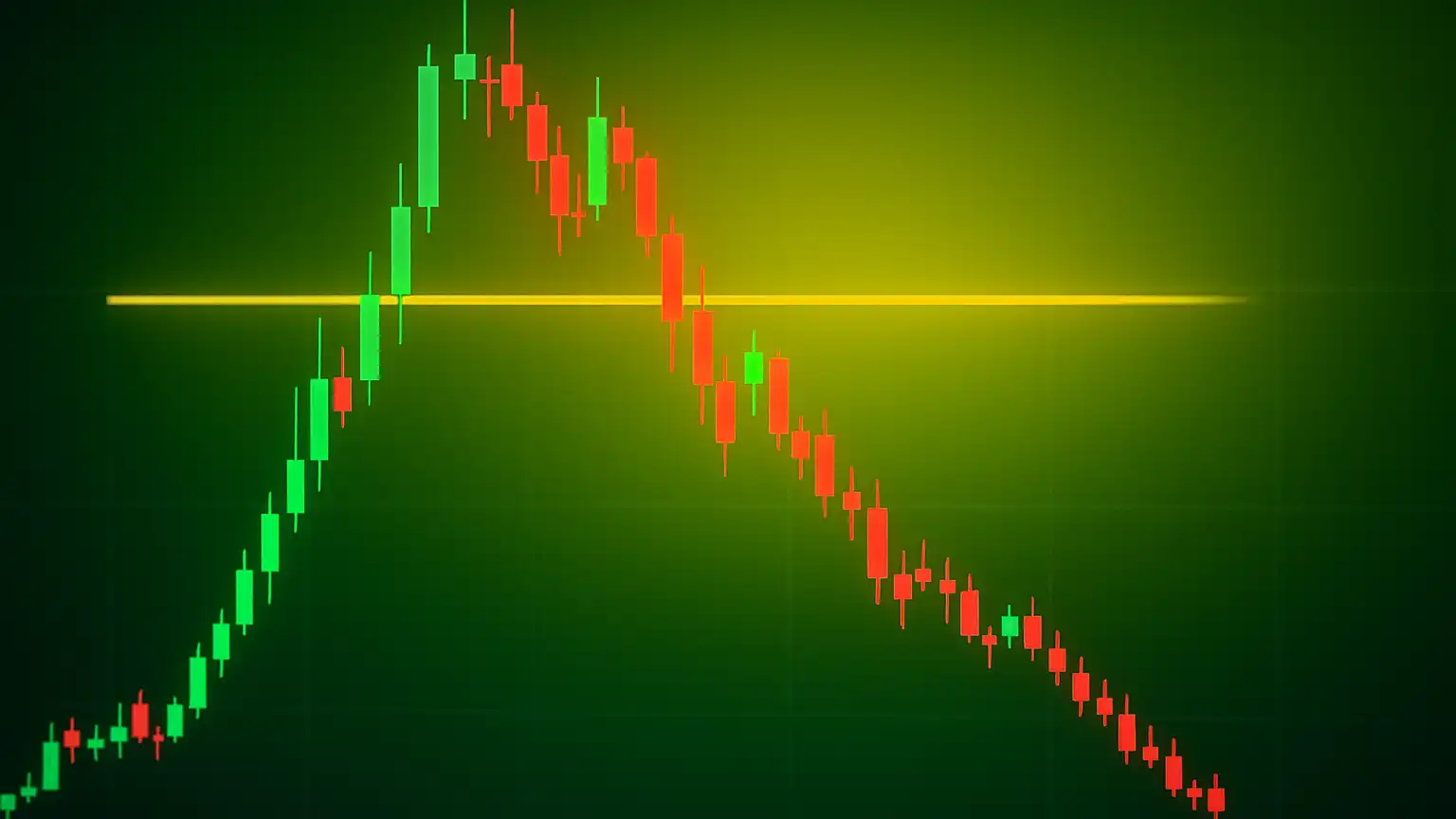
Pythia is trading around $0.04814 USDT right now, down about 3% over the last 24 hours. The token is clearly under pressure, struggling to climb back above its key moving averages. Looking at the bigger picture, PYTHIA sits well below both its 50-day and 200-day exponential moving averages—a textbook sign of a downtrend that’s still intact.
The daily indicators paint a picture of indecision. The Relative Strength Index hovers near 47, which is neutral territory—not oversold enough to suggest a bounce is imminent, but not overbought either. The MACD indicator remains muted with no clear signal of a reversal brewing. What we are seeing, though, is increased volatility. The Average True Range measurements show some large candle swings, meaning the price could move sharply in either direction without much warning.
Support levels are clustering just below the current price. Traders are watching $0.04790 as the first line of defense, followed by $0.04717, with stronger support around $0.04596. On the flip side, resistance zones sit at approximately $0.04984, $0.05105, and $0.05178. These are the levels PYTHIA needs to punch through if bulls want to shift the sentiment and regain control.
Technical Indicators & Chart Dynamics
When you pull up the daily chart, the story becomes clearer. Multiple moving averages—the 20-day, 50-day, and 100-day lines—are all sitting above the current price like a ceiling. Over recent weeks, PYTHIA has repeatedly failed to hold above the $0.050 to $0.052 region. Each attempt to break higher has been met with selling pressure.
The MACD histogram has drifted into slightly negative territory, confirming that momentum still leans bearish. The RSI, depending on which platform you check, sits somewhere between 40 and 45—reflecting weak buying interest and a lack of conviction from bulls.
Other oscillators tell a mixed story. The Stochastic RSI is flashing potential oversold signals, hinting that a short-term bounce could be possible. But tools like Williams %R and the Commodity Channel Index remain stuck in neutral-to-bearish zones. The Average Directional Index shows low to moderate readings, which typically means there’s no strong trend in place. In other words, we’re likely looking at range-bound action unless something breaks decisively. Bollinger Bands aren’t particularly wide either, so the price isn’t stretched—but it’s also not compressing enough to signal an imminent breakout.
Scenario‐Based Price Predictions & Key Levels to Watch
Bullish Scenario: Breaking Above Resistance
If Pythia manages to close above the $0.050 to $0.052 resistance zone—especially if it clears the 50-day EMA—bulls might finally have a chance to take control in the short term. A clean daily close above $0.052 could open the door to $0.055 or even $0.056, where the next cluster of resistance waits.
Volume will be absolutely critical here. A spike in trading activity would give credibility to any upward move. Without it, any rally could just be a trap. Traders should watch for the MACD to cross upward and the RSI to push above 50 as confirmation signals before getting too excited.
Bearish Scenario: Support Gives Way
On the downside, if PYTHIA breaks below that first support at $0.04790, things could get ugly fast. The next stop would likely be $0.04596, and if that doesn’t hold, we could see a slide toward $0.0439—a level that lines up with deeper Fibonacci retracement support.
Given the current 24-hour losses and the overall bearish trend, testing those lower levels seems like the more probable path unless we see a sudden shift in sentiment.
Outlook & Risk Factors
Even if PYTHIA does manage to break above resistance, there are some structural concerns that aren’t going away. The token has posted quarterly losses that suggest momentum is fading. Airdrop-driven rallies tend to reverse once the initial excitement wears off and people start taking profits.
There’s also the broader regulatory environment to consider. Increased scrutiny in both the biotech and AI sectors could introduce unexpected risks. Until we see tangible product adoption—real usage from initiatives like Orama Labs and the DeSci ecosystem—the price action is likely to reflect speculation more than fundamentals. For now, caution seems warranted.