Market Context and Recent Developments
StraitsX USD (XUSD) is a dollar-backed stablecoin out of Singapore that’s been quietly building momentum through smart partnerships and regulatory wins. The big news? It’s launching on Solana in early 2026 alongside its Singapore dollar counterpart, XSGD. The Solana Foundation is backing the move, betting that faster transactions and lower costs will make XUSD attractive for AI applications, digital commerce, and cross-border payments between USD and SGD.
On the partnership front, StraitsX has teamed up with Grab—the Southeast Asian super app—to embed XUSD into its Web3 wallet infrastructure. That’s potentially millions of merchants across the region gaining access to stablecoin payments. Meanwhile, Singapore’s Monetary Authority has been laying down clear stablecoin rules, and StraitsX is aligning itself with those frameworks. For a stablecoin, that kind of regulatory clarity is gold—it builds trust with institutions and merchants who need to know the rules won’t change overnight.
Current Technical Picture
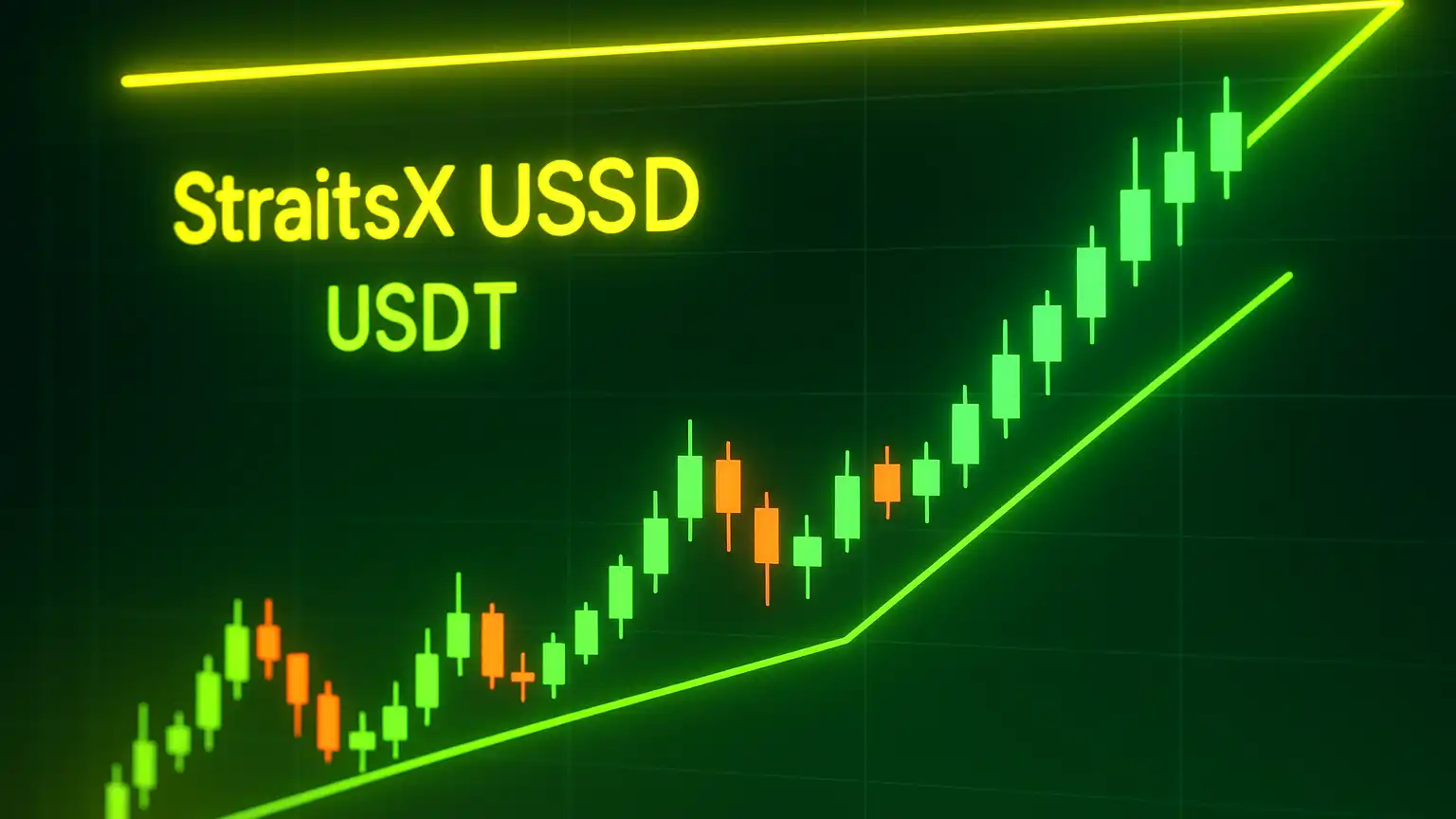
Right now, XUSD is trading at about 0.99989974 USDT—essentially holding its dollar peg with a tiny uptick of +0.08% over the last 24 hours. That’s exactly what you want from a stablecoin: boring price action that stays close to $1.00.
Looking at the 4-hour chart, the Relative Strength Index sits around 44, which suggests mild bearish momentum but nothing alarming. It’s neutral territory—not oversold, not overbought. The MACD tells a similar story: the line is below the signal with a negative histogram, meaning short-term selling pressure has been slightly stronger than buying interest. Nothing dramatic, just gentle downward drift within a very tight range.
Both the Simple Moving Average and Exponential Moving Average hover just above the current price—around 1.00114 and 1.00116 respectively. That creates a soft ceiling overhead. Meanwhile, support is holding firm just under the dollar mark at roughly 0.9999.
Support and Resistance Zones
The daily pivot analysis gives us a clear roadmap. The pivot point sits at 1.0010, with resistance levels at R1 = 1.00130, R2 = 1.00160, and R3 = 1.00190. On the downside, support levels are S1 = 1.00070, S2 = 1.00040, and S3 = 1.00010. Realistically, XUSD is trading in a narrow band between about 0.9999 and 1.0012—a range you could fit on the head of a pin compared to most crypto assets.
Support near 0.9999 looks solid. If that breaks, the next cushions are around 1.00040 and 1.00010—still barely a blip from the peg. On the upside, resistance clusters just above the dollar mark around 1.0011 to 1.0012. Breaking through toward 1.0016 or higher would require a surge in demand or some catalyst like unexpectedly strong adoption from the Solana launch or Grab integration.
Short-Term Outlook and Risks
Given the strong backing, regulatory alignment, and growing merchant network, XUSD isn’t likely to stray far from its peg under normal conditions. But the technical indicators suggest a slight downward tilt within that tight band. Over the next 24 to 72 hours, I’d expect XUSD to drift toward support around 0.9999, possibly testing the S2 level near 1.00040 if liquidity stays stable. If that doesn’t hold, S3 around 1.00010 is the next likely stop—still well within acceptable stablecoin territory.
On the flip side, any positive catalysts—rapid uptake on Solana, a surge in Grab wallet usage, or broader institutional adoption—could push XUSD to test resistance in the 1.00110 to 1.00120 range. A sustained breakout above 1.00160 seems unlikely unless something major changes, given the current MACD and moving average pressure overhead.
Wildcards and Risk Factors
The biggest risks? Regulatory shifts beyond what Singapore’s MAS has already outlined, liquidity crunches in trading pairs, or any issues with reserve audits that could shake confidence. Stablecoins live and die on trust, and XUSD is still building its reputation compared to giants like USDC or USDT.
Low trading volume is another factor. Less-used stablecoins can see exaggerated slippage and wider spreads when liquidity dries up. That could lead to brief, sharp deviations from the peg even if the fundamentals remain sound.
The Solana integration is both an opportunity and a wildcard. If it goes smoothly, XUSD could see a meaningful uptick in usage and liquidity. But if there are hiccups—high gas fees, smart contract bugs, or network congestion—it could temporarily dampen sentiment and pressure the peg downward, even if only for a few hours or days.
Bottom line: XUSD is doing what a stablecoin should—tracking the dollar closely with only minor technical deviations. Barring any surprises, expect it to stay in a tight range of roughly 0.9995 to 1.0015 in the near to medium term, with resistance capping upside around 1.0012 and support holding firm near 0.9999. It’s stable, it’s boring, and for a stablecoin, that’s exactly the point.