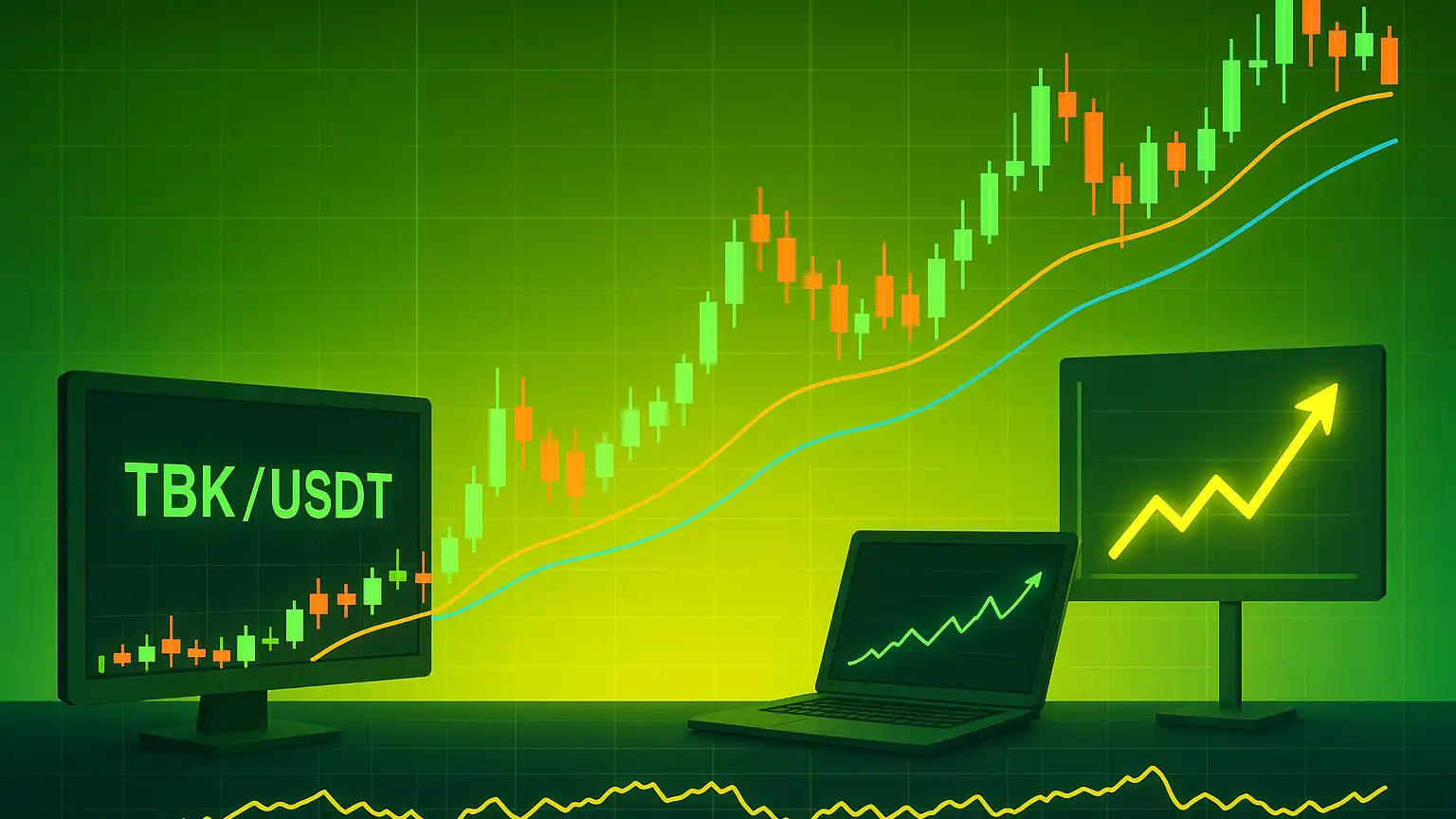
TronBank’s native token TBK is currently trading at approximately $0.3979, showing a modest 24-hour gain of just over +1.65%. While today’s movement offers a slight reprieve, the broader picture tells a more challenging story. Since its December 2025 listing, TBK has been struggling to maintain momentum, falling considerably from its launch price levels.
The token made its debut on major exchanges late last year—KuCoin’s Innovation Zone on December 24 and MEXC Global around the same timeframe. Withdrawals followed shortly after. While these listings initially brought liquidity to the market, they were quickly followed by sharp price corrections that have continued to weigh on sentiment.
On the fundamentals side, TronBank has implemented a deflationary tokenomics model centered around buyback and burn mechanisms. The program is funded by revenue generated from the platform’s core services: energy leasing and TRX staking. During Q3-Q4 2025, the project committed approximately $14.84 million to buybacks, with transactions conducted transparently on-chain. The goal is straightforward—reduce circulating supply over time and create upward pressure on price as demand absorbs fewer tokens.
What the Charts Are Telling Us
From a technical standpoint, the outlook remains predominantly bearish. Moving averages across all major timeframes—10, 20, 50, 100, and 200 periods—are flashing sell signals almost unanimously. Price action is sitting well below these averages, indicating sustained downward momentum with little indication of an imminent reversal.
Oscillators paint a mixed but cautious picture. The RSI(14) is hovering in the low 30s, around 33-34, which puts it near oversold territory without quite reaching extreme levels. The MACD has shown some tentative signs of stabilization, but no decisive bullish crossover has materialized. Other momentum indicators like Stochastic RSI and Rate of Change suggest buying pressure remains weak, while the ADX reading stays elevated—signaling that the downtrend, while possibly exhausted, still holds considerable strength.
Liquidity is another concern. Daily trading volumes are modest relative to the token’s circulating supply and market cap. Thin liquidity amplifies volatility and makes support and resistance levels less reliable. Recent appearances on “top loser” lists have only compounded negative sentiment, creating a feedback loop that tends to attract more selling in the absence of fresh positive catalysts.
Key Levels to Watch
On the downside, the immediate support zone sits around $0.35-$0.40. A clean break below this range could open the door to deeper losses, potentially pushing TBK toward $0.25-$0.30, where more substantial structural support—both psychological and supply-based—may provide a floor.
For any meaningful recovery to take hold, bulls would first need to reclaim resistance in the $0.50-$0.60 range. Beyond that, $0.80 represents a major hurdle. Given the current trend structure, these levels feel like steep climbs without a significant shift in market dynamics or fresh catalysts.
Price Scenarios and What Could Change the Narrative
Looking ahead, two primary scenarios seem most likely based on current conditions.
In the bearish base case, TBK fails to hold above its short-term support around $0.35-$0.40. Continued selling pressure—whether from early holders taking profits, disappointed investors exiting, or simple lack of demand—could drive the token down to $0.25 or even $0.20 over the next four to eight weeks. In this scenario, oversold conditions might trigger brief bounces, but without strong volume or conviction, they’re unlikely to reverse the broader trend. The burn program may provide some underlying support, but only if revenue streams remain robust and execution stays transparent.
The bullish reversal case hinges on several factors aligning. Improved exchange liquidity, increased usage of the platform’s staking and energy leasing services, and consistent buyback and burn activity could spark a turnaround. If TBK manages to close daily candles above $0.50 with confirming volume, there’s potential for a move toward $0.70-$0.80. A return to $1.00 or higher would require broader market tailwinds, meaningful ecosystem growth, or major announcements—think additional tier-1 exchange listings, strategic partnerships, or tangible improvements in protocol utility that drive genuine demand.
In between these extremes, expect possible consolidation in the $0.30-$0.50 range for several weeks as the market digests recent action and waits for a catalyst. Keep an eye on the MACD histogram: if it starts to compress (showing less negative momentum) and RSI fails to make new lows, that could signal bullish divergence and early signs of a trend change. Volume spikes tied to news or on-chain activity are also worth monitoring closely, as they often precede stronger directional moves.
The Role of Tokenomics and Ecosystem Health
The buyback and burn model is what sets TronBank apart from many other projects. Unlike speculative burns funded by arbitrary treasury allocations, TBK’s program is tied to actual business revenue—energy leasing and TRX staking. As these services generate income, tokens are purchased from the open market and burned on-chain, creating genuine supply reduction over time. If usage metrics grow—more active users, higher total value locked, increased staking participation—the revenue base expands, which in turn supports more aggressive buybacks.
That said, token distribution dynamics also matter. Overhang from initial allocations, especially large institutional or listing-related chunks, can dilute or delay the impact of burns. It takes time for supply reduction to outweigh sell pressure from early backers.
Adoption is the ultimate wildcard. As a protocol built within the TRON ecosystem, TBK benefits from TRON’s strengths: robust stablecoin infrastructure, high transaction throughput, and energy optimization features. But TBK’s success depends on visible, measurable activity. How many users are actually leasing energy? How many TRX stakers are migrating to earn TBK rewards? Are the AI-driven optimization features delivering real efficiencies, or are they more marketing than substance? Without consistent growth in these core metrics, narrative alone won’t be enough to sustain price.
For now, TBK sits at a crossroads. The technical picture is weak, sentiment is fragile, and liquidity is thin. But the underlying tokenomics provide a potential foundation for recovery if the team can execute and the ecosystem can grow. The next few weeks will be telling.