
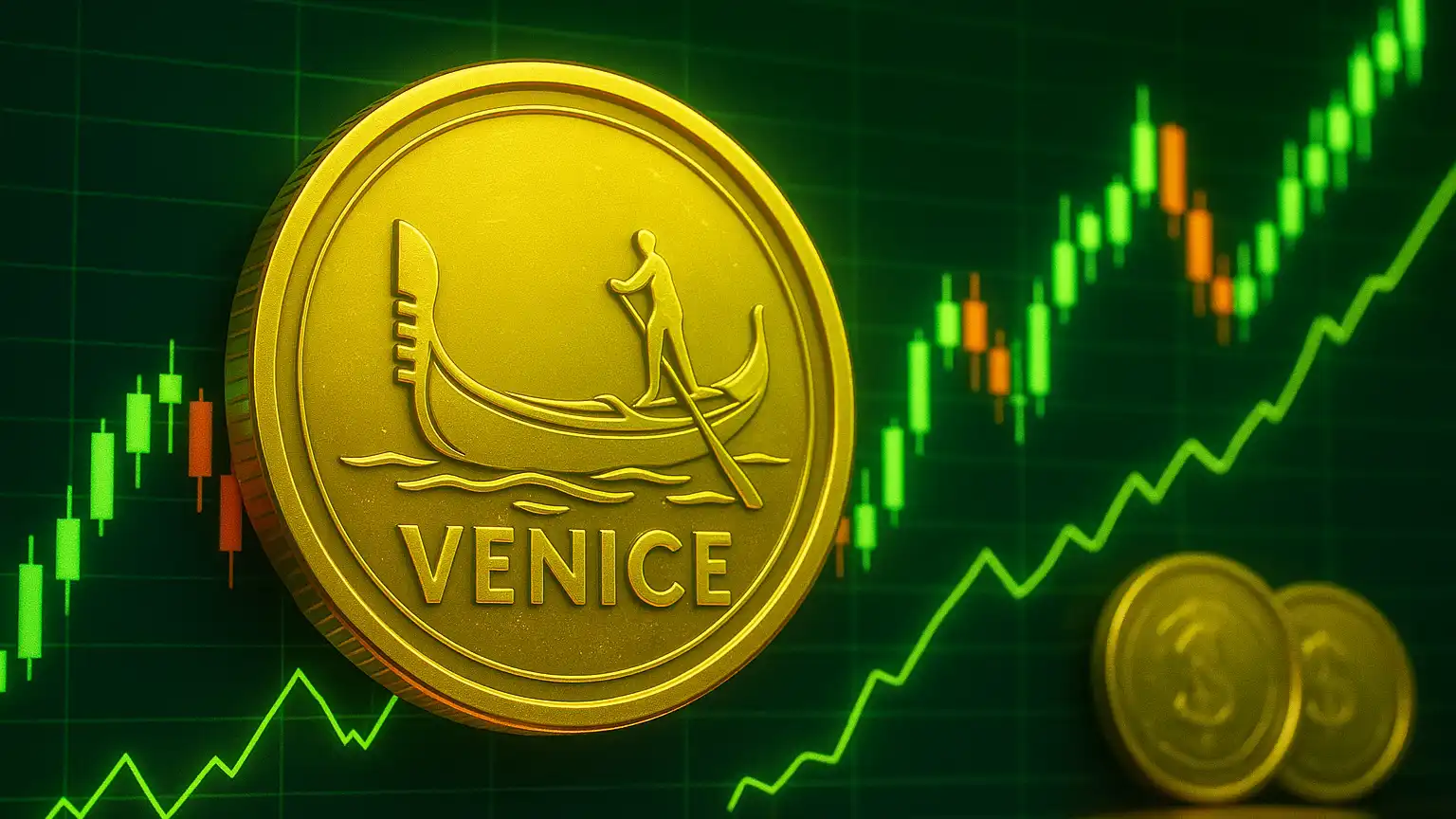
Venice Token has been making waves lately, and for good reason. The project just rolled out some meaningful changes to how its token works, and traders are trying to figure out what comes next. Right now, VVV is trading around $2.83, up about 14.5% in the last day. But beneath that price movement, there’s a lot more going on worth unpacking.
Why Venice Token Is Getting Attention
The biggest news is a supply cut. Starting February 10, 2026, Venice will reduce its token emissions from 8 million VVV per year down to 6 million. That’s a 25% drop, and it’s a deliberate move to slow down inflation and make the token scarcer over time. For anyone who’s watched crypto projects struggle with endless token unlocks, this kind of adjustment is a big deal.
On top of that, Venice introduced a buy-and-burn program. Each month, the platform takes a chunk of its revenue, buys VVV tokens off the open market, and burns them permanently. The first burn happened in December 2025, wiping out tens of thousands of tokens. It’s still early, but if this continues, it adds real deflationary pressure to the supply side.
Then there’s DIEM. This is Venice’s new utility layer, and it changes the game a bit. Previously, VVV was mostly used for staking or held as a reserve asset. Now, holders can mint DIEM tokens, which give them $1 per day in API credits for AI compute services. It’s a creative way to tie token ownership directly to platform usage, and it gives VVV a stronger reason to exist beyond speculation.
What the Charts Are Saying
Short-term momentum looks solid. The 5-day, 10-day, and 20-day moving averages are all trending up, which usually signals bullish energy. But the longer-term averages, like the 100-day and 200-day, are still lagging behind. That tells us the rally is young and hasn’t fully proven itself yet.
Here’s where things get tricky. The 14-day RSI is sitting in overbought territory on most timeframes, hovering between 70 and 90. That’s a yellow flag. When RSI gets that high, it often means the price has moved too far, too fast, and a pullback could be coming. Other indicators are mixed. The MACD is slightly negative in some readings, but momentum tools like Stochastics and ADX are leaning bullish. In short, the market is stretched, but not broken.
Support is clustering around $1.70 to $2.10. The 200-day moving average, which a lot of traders watch as a long-term trend gauge, sits just above $2.10. If VVV drops below that level and can’t recover, we could see a deeper correction. On the flip side, resistance is in the $2.30 to $2.65 range. A clean break above $2.70 would signal strength and open the door to higher targets.
A Few Things That Could Go Wrong
Overbought readings aren’t the only concern. There’s chatter in Venice’s community forums about liquidity issues and some friction with staking and unstaking processes. If those problems persist, it could shake confidence, especially among newer holders. And like any crypto project tied to AI infrastructure, Venice is exposed to broader market sentiment. If regulators crack down or macroeconomic conditions sour, speculative interest could dry up fast.
Where the Price Could Go From Here
In the next one to three months, if momentum holds, VVV could test $2.60 to $2.70 pretty quickly. A breakout from there might push the token toward $3.20 to $3.50. But if overbought signals trigger profit-taking, expect a retest of support around $2.10 to $1.80. A drop below $1.70 would be more serious, potentially pulling the price down to $1.30 or $1.50.
Looking six to twelve months out, the tokenomics changes start to matter more. With lower emissions and monthly burns, assuming Venice keeps growing its API user base and DIEM adoption picks up, a range of $4.50 to $6.50 seems reasonable. In a really strong scenario, maybe we see $8 to $10, but that would need sustained volume and favorable market conditions.
Long-term, from 2026 into 2028 and beyond, if everything goes right—burns continue, emissions stay capped, and DIEM becomes a real driver of demand—VVV could hit double digits comfortably. Some forecasts float numbers like $10 to $20 or higher. But that’s a lot of “ifs,” and crypto is unpredictable at the best of times.
Venice Token is at a turning point. The project is tightening supply, adding real utility, and attracting attention. The technicals show both strength and warning signs. For traders, the next few weeks could be volatile, with corrections very much on the table. For longer-term investors, the setup looks interesting, but only if the team delivers and the ecosystem actually grows. As always, do your homework and don’t bet more than you can afford to lose.