Why ZORA Has Been Moving
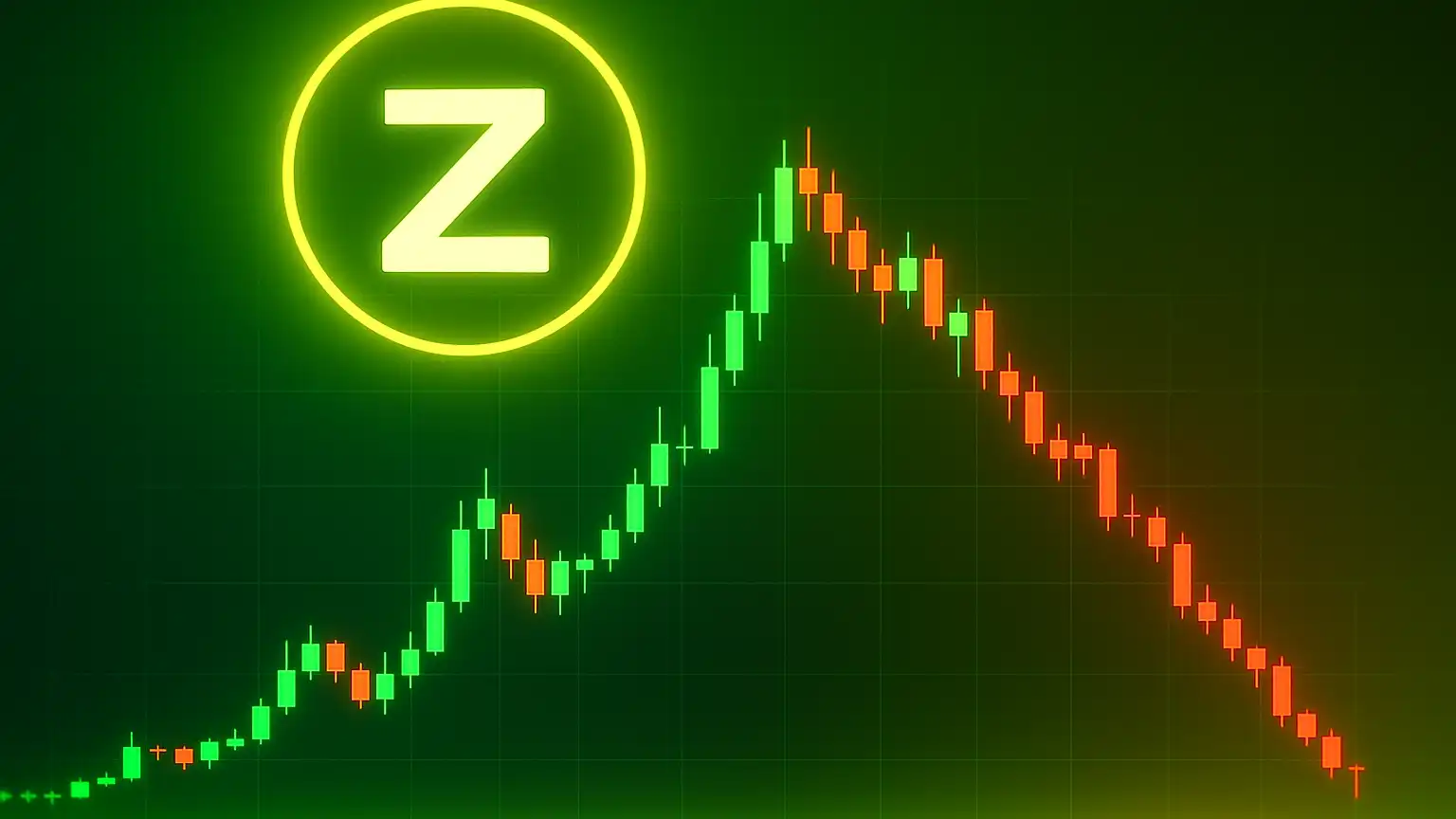
ZORA—the token powering the Base network’s creator economy tools like Content Coins—has had a wild ride lately. Back in October 2025, its Robinhood listing sparked a one-day rally of over 70%, pushing prices toward $0.14 as retail traders piled in. That euphoria was backed by some solid signals: whales were accumulating, and fewer coins were sitting on exchanges waiting to be sold.
But the party didn’t last. Token unlocks have been throwing cold water on the rally. In October alone, 166.7 million ZORA—nearly 5% of the circulating supply—hit the market. When that much new supply comes online during shaky market conditions, prices tend to struggle. Broader crypto sentiment hasn’t helped either, with risk appetite staying muted across the board.
Where ZORA Stands Right Now
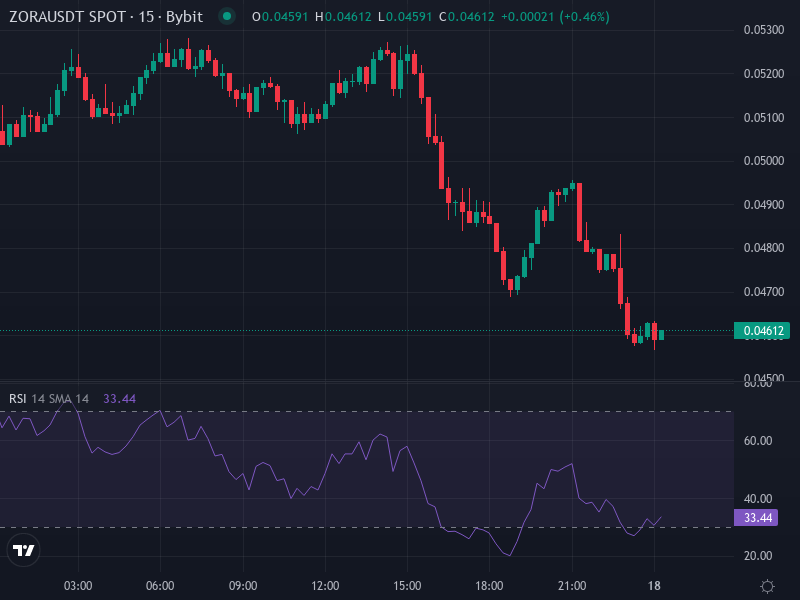
As of the latest session, ZORA is trading around $0.046, down roughly 9.5% in 24 hours. That’s a sharp drop, and the charts aren’t painting a pretty picture for the short term. The token has been stuck in a descending channel for weeks—each bounce gets rejected near $0.050, while dips find shaky footing around $0.046 to $0.047.
The technical indicators tell a similar story. The 14-day RSI is hovering near 44, which is neutral territory leaning slightly oversold. Not quite oversold enough to trigger automatic bounce trades, but low enough that sellers are in control. The MACD is flat to negative, and short-term moving averages are all pointing down. Most technical dashboards are flashing bearish signals, with very few bright spots.
Key Levels to Watch
Support is clustering around $0.046 right now, with the next major floor sitting at $0.044 and then $0.042 if things get worse. On the upside, resistance is firmly planted near $0.050. If bulls can push through that ceiling, there’s room to run toward $0.055 or even $0.060—but that’s a big “if” given current momentum.
The pattern here is pretty clear: lower highs and lower lows. Unless something changes soon, traders should expect more downside tests before any meaningful reversal takes shape.
What Comes Next
In the next week or two, the most likely scenario is continued drift lower. A test of $0.046 support seems inevitable, and if that breaks, we’re looking at $0.044 or even $0.042. Volume could spark brief bounces—especially if RSI dips into oversold territory—but resistance near $0.049 will probably cap any rallies.
Looking one to three months out, ZORA will likely chop around between $0.042 and $0.055 unless something big changes. A real reversal would need strong volume, a break above $0.055, and ideally some positive news from the ecosystem—think meaningful adoption numbers, new exchange listings, or integrations that expand the user base.
What Could Move the Needle
On the bullish side, watch for adoption by creators. If the Creator Coins feature gains real traction, that could shift sentiment fast. New exchange listings or derivative products would add liquidity and attract fresh capital. Cross-chain integrations—say, a Solana bridge or deeper Base ecosystem ties—could also open up new demand.
On the risk side, token unlocks remain the elephant in the room. Every scheduled release adds supply pressure that can smother rallies. Broader market weakness would compound the problem, and if ZORA keeps getting rejected at $0.050, that resistance could harden into a long-term ceiling.
Bottom Line
ZORA is in a tough spot right now. The charts are bearish, momentum is lacking, and supply pressure from unlocks isn’t going away. For traders, the $0.043 to $0.047 zone is make-or-break. Holding that range keeps the door open for stabilization or even a modest recovery. Breaking below it opens the path to $0.040 or lower.
If you’re looking to take a position, think small and defensive. Use tight stop-losses, keep an eye on unlock schedules, and watch for changes in exchange reserves or whale activity. ZORA has potential—it’s tied to a growing ecosystem and has some real use cases—but right now, the risk is high and the momentum is against it. Patience and careful risk management are the name of the game.